
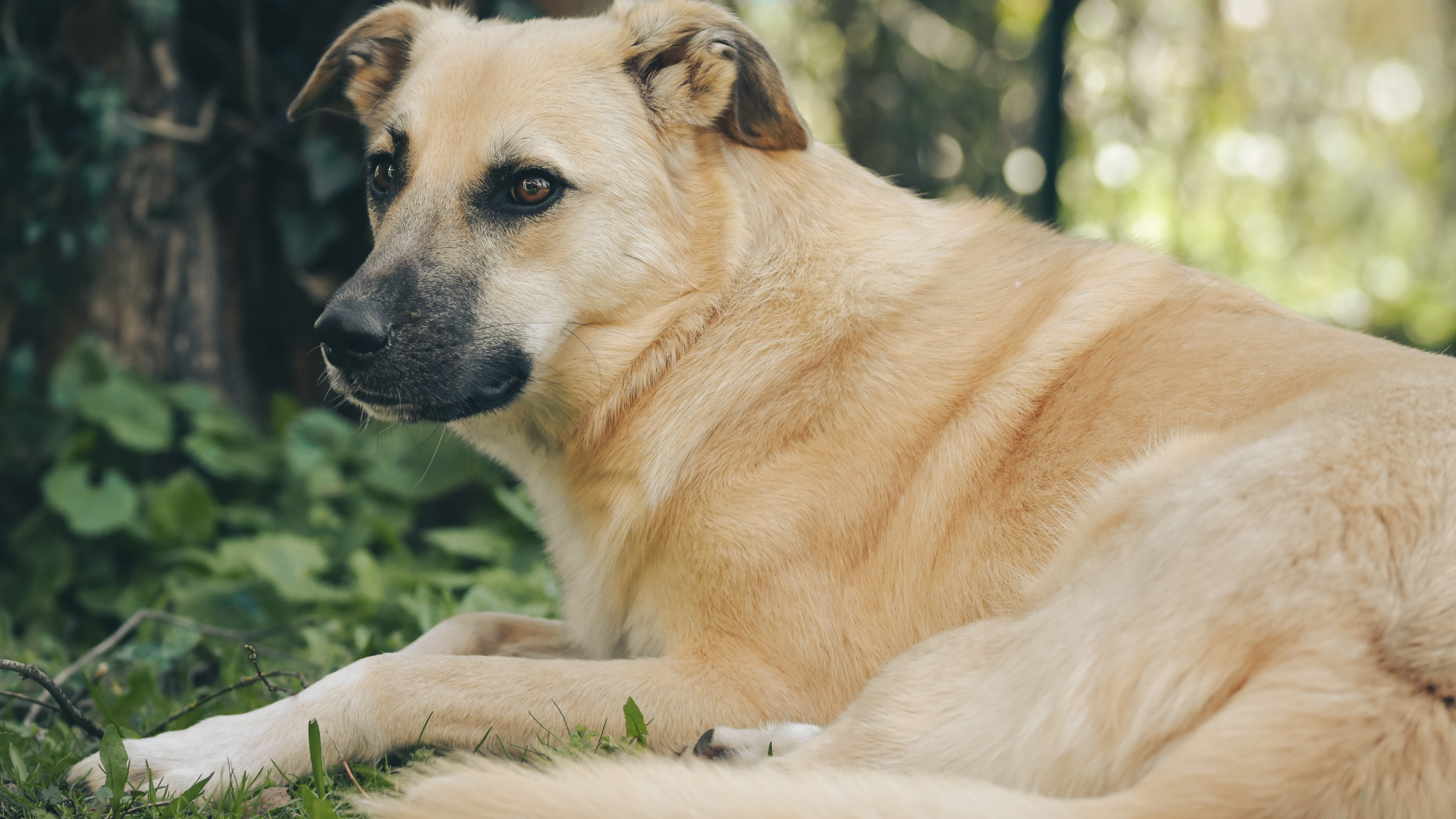
Dogs aged 6 to 24 months
Adolescent Dog Training In GlasgowGet Your Teenage Dog BackWithout Force Or Gadgets
Recall that used to work, a lead that is now a tug of war, barking at dogs you used to walk past, and a dog with adult strength and adolescent judgement. We rebuild attention, impulse control and lead skills in the real environments where your dog is failing. So walks stop being something you have to survive.
4.7★ from 185 Google reviews · 17+ years with Glasgow's hardest cases · reward-based only, no shock or prong collars.
4.7★ · 185 Google reviews
Verified on our Google Business Profile
17+ years' experience
Family homes, rescue shelters and courtrooms
Karen Pryor Academy trained
John holds the KPA Dog Trainer Professional qualification
48-hour response
We aim to reply to every enquiry
Fully insured
Public liability + care-of-custody cover
What this service is
Adolescence is not your dog going backwards. It is your training being tested.
Between roughly six and twenty-four months, a dog's body finishes growing while its impulse control is still under construction. Hormones arrive, the world becomes more interesting than you are, and anything that was only half-trained collapses under distraction. This is the single most common age at which owners contact us, and the age at which most dogs are rehomed.
Adolescent training is targeted repair and reinforcement work: recall rebuilt around real distractions, lead walking retaught on the routes you actually use, impulse control around dogs, joggers, cyclists, cats and squirrels, and a settle that holds when the house is busy. It is not a repeat of puppy class with bigger treats.
We work with you at home and outdoors in your local area, because adolescent behaviour is context-specific. A dog that ignores you at the park gates does not need more sit-stays in the kitchen; it needs graded exposure to the park gates with a plan for what happens when arousal spikes.
All of it is reward-based. Adolescence is exactly when owners are pushed hardest towards prong collars, e-collars, slip leads and 'dominance' advice, because the dog is big enough that force looks like a shortcut. Suppression at this age routinely converts a bouncy, frustrated teenager into a dog that stops giving warnings. And that is the dog we later assess in bite cases.
Who it's for
- Owners whose recall worked at five months and vanished at nine
- Dogs pulling hard enough to cause shoulder, wrist or back pain
- Teenagers that have started barking or lunging at dogs on lead
- Rescue dogs adopted at 8 to 18 months with no known training history
- Working breeds. Collies, spaniels, malinois, GSDs. With more drive than direction
- Households where the dog listens to one person and ignores everyone else
When to get help
- You've started walking at 6am to avoid other dogs
- Your dog is off-lead less and less because you can't get them back
- Jumping up, mouthing or humping has returned or intensified
- There's been a scuffle, a chase, or a near miss with traffic
- Guarding of food, toys, beds or doorways has appeared
- You're being told to be firmer, and it's making things worse
What happens if it's left
The teenage months decide what kind of adult dog you live with
Adolescence is when habits harden. Every walk where your dog pulls to the park is a rep of pulling. Every recall you shout three times and give up on teaches your dog that your first cue is optional. Every lunge that successfully makes another dog go away pays the lunging. Dogs are not being difficult, they are learning exactly what the environment is teaching them.
Left alone, this rarely plateaus. Frustrated lead greeting becomes lead reactivity. Chasing becomes a rehearsed predatory sequence that is far harder to interrupt. Guarding that was once a stiff body over a chew becomes a snap. Owners then start avoiding: no more visitors, no more pubs, no more family walks, and the dog's world shrinks. Which makes the behaviour worse again.
The practical costs stack up too. Physiotherapy for the shoulder you injured being pulled over. A vet bill after a scuffle. A £150 harness graveyard of kit that did not fix the problem. Time off work after an incident. In the worst cases, a dog control notice or a bite claim. We write independent behavioural reports for exactly these cases, and most of them started with an unhelped teenager.
The other real risk at this age is suppression. Aversive equipment can look like it works within one session, because pain and fear stop behaviour fast. What it does not do is teach the dog what to do instead, and it removes the growl and the stiffening that warned you. A dog that has learned warnings are punished is a dog that eventually goes straight to the bite.
The most common mistakes we're called in to undo
- Assuming your dog will 'grow out of it'. Adolescence is when problems are being installed, not shed.
- Repeating a recall cue that no longer works instead of rebuilding its value from scratch.
- Switching to a slip lead or prong because pulling got stronger, which adds pain to an already aroused dog.
- Flooding: walking straight past other dogs at two metres to 'show them it's fine'.
- Letting off-lead greetings continue when they end in tension, because 'they'll sort it out'.
- Punishing growling around food or toys, which removes the warning without removing the worry.
- Cutting exercise or increasing exercise dramatically instead of managing arousal and rest.
How we work
A structured plan, not a one-off lesson you have to interpret yourself
Step 1
History and honest triage
You send your dog's age, sex, breed, how long you've owned them and what's happening. We tell you which of it is normal adolescence, which is a training gap, and which is a genuine behaviour case.
Step 2
Assessment in context
We watch your dog where it goes wrong: the close, the front door, the street, the park gate. We record what triggers what, at what distance, and how quickly your dog recovers.
Step 3
Plan with priorities
You get a written, ordered plan: what to train, what to manage while training catches up, and what to stop doing today. Management stops the rehearsal so training has room to work.
Step 4
Skills coaching
Marker timing, reward placement, lead mechanics, an emergency turn, a middle position and a functional settle. We coach your handling, out on real walks, not in theory.
Step 5
Distraction ladder
We add difficulty deliberately. Distance, movement, other dogs, dropped food, other handlers. So the skills survive the real world instead of only working in the garden.
Step 6
Review and handover
Follow-ups in person or by video track progress and adjust the plan through the rest of adolescence. You finish able to read your dog and make your own calls.
What you get out of it
Specific outcomes you can measure in weeks, not vague promises
Recall you can actually rely on
Rebuilt with a fresh cue, a long line and a paid history around genuine distractions, so off-lead time comes back safely rather than hopefully.
Walks without the shoulder pain
Loose-lead mechanics and equipment fit that removes tension instead of punishing it. Most owners feel a difference on the first coached walk.
Calm around other dogs
Distance work, disengagement cues and a plan for surprise encounters, so passing another dog stops being a confrontation.
Lower arousal at home
Rest scheduling, enrichment and door routines cut the background over-stimulation that makes every outdoor problem harder to train.
Safety for you and your dog
Fewer chases into roads, fewer scuffles, fewer incidents that could become insurance or legal problems.
A dog you keep
Adolescence is the peak age for rehoming. Getting through it with skills intact is the difference between a hard year and a decade of easy ones.
The detail
Methods, equipment and the variations of this work we handle
Methods and mechanics we teach in adolescent work
The core is marker-based reinforcement with precise timing, delivered by you rather than by us. John holds the Karen Pryor Academy Dog Trainer Professional qualification, and adolescent training is where mechanical skill pays the biggest dividends: a marker half a second late in a high-arousal environment teaches the dog something you did not intend.
Alongside that we use differential reinforcement. Paying the behaviour you want in the exact situation the unwanted behaviour used to happen, plus counter-conditioning where emotion is involved, and antecedent management so your dog stops practising the problem while the new behaviour is being built.
We also work on arousal literacy. Adolescent dogs frequently cannot come down from excitement, and owners misread that as stubbornness. Learning to spot the point where your dog stops being able to think, and knowing what to do at that moment, changes far more than another twenty minutes of heelwork.
- Marker training and reward placement to build position, not just compliance
- Emergency turn and disengagement cue for surprise encounters
- Long-line recall protocol with graded distraction
- Settle and off-switch work for high-drive breeds
- Consent-based handling for grooming, harnesses and vet visits
Equipment: what helps, and what we never use
We use a well-fitted Y or H shaped harness, a fixed lead for streets, a long line for recall work in safe open space, food rewards graded by value, and a settle mat. Where a dog is reacting, we may add a muzzle introduced properly and positively as a safety tool. A conditioned muzzle is a welfare measure, not a punishment.
The harnesses we recommend are Perfect Fit, Ruffwear and the Copenhagen Harness. We are not commercially affiliated with any of these products. The front yolk should be Y or H shaped and should not restrict the shoulders, and optimally the front clip is not used. Attaching a lead to the neck causes strain and often damage to the muscles and nerves as well as the throat, so unless there is a valid medical reason for not wearing a harness, our recommendation is that harnesses are used in all cases.
We do not use prong collars, electric or vibration collars, slip leads, half-checks or check chains under any circumstances. Retractable leads are avoided for adolescent training because constant tension is the exact sensation we are trying to remove from lead walking.
Breed and drive variations we plan around
Adolescence looks different depending on what your dog was bred to do, and the plan changes accordingly. Herding breeds tend to fixate on movement, cars, bikes, joggers, children. So the work centres on interrupting the eye-stalk-chase sequence and providing legal outlets. Gundogs collect things and range wide, so recall and retrieve channels do the heavy lifting.
Terriers and high prey-drive crosses need predatory outlets built into the routine, not suppressed. Guardian breeds coming into adolescence often start taking the front door and garden boundary seriously, so we work on doorway routines and clear roles before territorial habits set.
Rescue adolescents are their own category: unknown history, sometimes a kennel period, often significant gaps in exposure. We assume nothing and assess everything, including whether apparent 'disobedience' is actually fear or discomfort. Where there is any suggestion of pain, sudden reactivity, touch sensitivity, gait changes. We ask you to involve your vet, because behaviour work on a painful dog is unfair and ineffective.
Where sessions happen across Glasgow
We are a service-area business: sessions take place at your home or outdoors in a location local to you, with no premises for clients to attend. That matters for adolescent dogs, because the training has to happen where the failure happens. Your close, your street, your park gate, your usual route at your usual time.
We cover Glasgow, Greater Glasgow, South Lanarkshire, North Lanarkshire, East Renfrewshire, Renfrewshire, East Dunbartonshire, West Dunbartonshire, Inverclyde, Falkirk and East Ayrshire. Remote 1-to-1 video sessions are available for owners outside that area or between visits, and we also run seminars and workshops for owners and professionals.
Questions we're asked every week
Straight answers before you get in touch
How much does adolescent dog training cost in Glasgow?
Sessions can be booked individually or as a block, and we quote based on what your dog needs after reading your history. A recall rebuild is a different job from a reactivity case. Send details through the form and we'll set out the options and prices. Online courses are £30 to £150 and the monthly membership is £43 per month if you'd rather start self-paced.
How long does it take to fix teenage behaviour?
Lead walking and settle work usually improve within two to three weeks of daily practice. Recall around real distractions is typically a six to twelve week project because it needs graded exposure. Reactivity depends on how long it has been rehearsed and how much space you have to work with.
My dog is over a year old. Is it too late?
No. Dogs learn throughout life. Older adolescents simply have more practised habits, so the work includes more management to stop the rehearsal while new behaviour is built. We routinely take on dogs at 18 months to two years and beyond.
Do you use e-collars or prong collars for strong dogs?
Never, regardless of the dog's size or strength. We do not use prong collars, e-collars, slip leads or check chains. Strength is a handling and equipment problem plus a training problem, and both are solvable without pain.
Do I need a vet referral?
No. We accept veterinary referrals and take clients directly. If your vet has referred you, bring the notes. If we see signs that pain may be driving the behaviour, we'll ask you to have your vet check it before we go further.
Will one session be enough?
Sometimes, if the issue is a specific skill gap and you're a confident handler. More often adolescent cases benefit from a block, because the point is generalising skills across distractions, and that takes more than one visit. We'll tell you honestly which category you're in.
Do you offer a guarantee?
We don't sell behavioural guarantees. Anyone who does is guessing about the 167 hours a week they're not with your dog. What you get is a written plan, honest expectations, coached handling and 17+ years of experience. Our record is public: 4.7 stars from 185 Google reviews.
How fast do you respond, and can you help urgently?
We aim to reply to every enquiry within 48 hours, occasionally slightly longer during busy periods. If there's been a bite, an escape or an incident with another dog, phone 07790 608841 rather than emailing.
Can you help if I'm not in Glasgow?
Yes. Remote 1-to-1 video sessions run the same structure as in-person work and we deliver them across the UK and abroad. Our online courses and membership are also available nationally and worldwide.
Are you insured for working with my dog?
Yes. We hold public liability insurance and professional care-of-custody cover for handling dogs.
Related training and next steps
Next step
Get through adolescence with the dog you wanted, not the one you're managing
Tell us your dog's age, breed, how long you've had them, what's going wrong and where. We'll come back with a straight assessment of what's normal teenage behaviour, what needs training, and what needs a proper behaviour plan.
07790 608841- Free, no-pressure discovery call to start, with no obligation to book
- 4.7★ from 185 Google reviews
- Public liability and care-of-custody insured
- Reward-based only, no prong collars, e-collars, slip leads or check chains