Aggression, reactivity and bite cases
Dog Aggression & ReactivityBehaviour Help In GlasgowFrom Force-Free Specialists
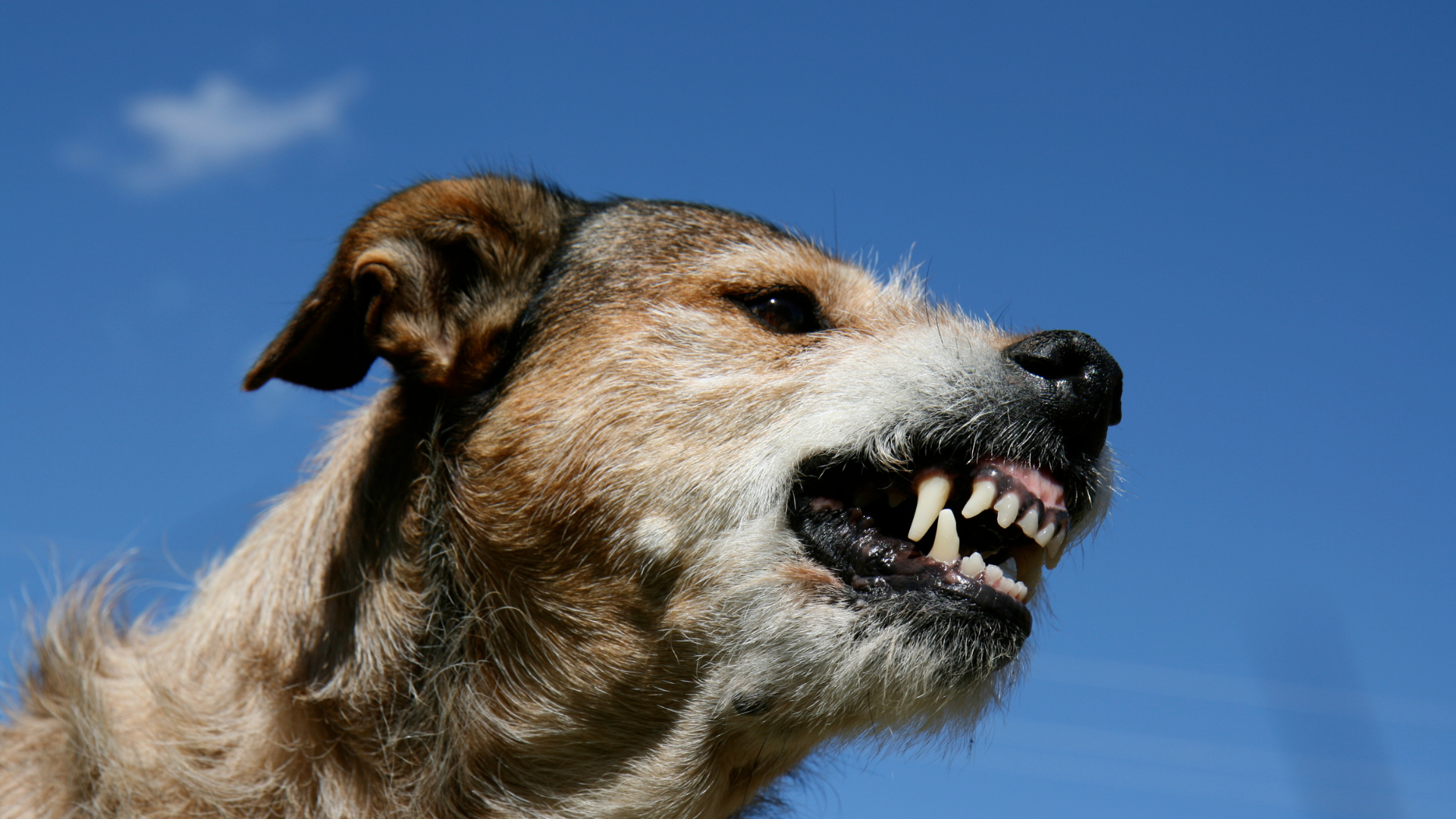
Lunging, growling, barking, snapping or a bite that has already happened. Handled by a behaviour team whose assessments are used in court, whose methods never involve pain, and who will not tell you your dog is trying to dominate you. We give you distance, a plan, and a way to walk your dog again.
4.7★ from 185 Google reviews · 17+ years on aggression cases · veterinary referrals accepted and direct clients welcome.
4.7★ · 185 Google reviews
Verified on our Google Business Profile
17+ years' experience
Family homes, rescue shelters and courtrooms
Karen Pryor Academy trained
John holds the KPA Dog Trainer Professional qualification
48-hour response
We aim to reply to every enquiry
Fully insured
Public liability + care-of-custody cover
What this service is
Aggression is almost always a dog telling you it cannot cope. Not a dog being bad
Growling, barking, lunging, snapping and biting are distance-increasing behaviours. Whatever the label, the dog is trying to make something go away, or trying to keep something it needs. Our job is to work out what the dog is worried about, remove the pressure it cannot yet handle, and teach it a behaviour that works better than aggression does.
We take dog-to-dog reactivity, dog-to-human aggression, resource guarding, redirected aggression, fear-based defensive behaviour, muzzle and handling aggression, and multi-dog household conflict. Cases arrive both as veterinary referrals and directly from owners, you do not need a referral to contact us, though we will always ask you to rule out pain with your vet where the history suggests it.
The work starts with safety and management: what stops the rehearsal today. Then assessment: triggers, thresholds, distances, body language, recovery time, and the exact sequence before an incident. Then the behaviour plan: counter-conditioning and desensitisation, disengagement skills, and functional alternatives your dog can actually perform when the trigger appears.
None of it involves prong collars, e-collars, slip leads or check chains. We do not use them on any dog, and we are especially clear about it here: punishing an aggressive display suppresses the warning without changing the emotion. A dog that has been corrected for growling frequently escalates straight to a bite with no visible build-up, and those are the cases we later assess for legal proceedings.
Who it's for
- Owners who cross the road, walk at dawn, or have stopped walking altogether
- Dogs that bark and lunge on lead but are sometimes fine off it
- Fear-aggressive dogs that snap at visitors, vets or groomers
- Dogs that guard food, toys, beds, doorways or a particular person
- Multi-dog households where the dogs can no longer be together
- Cases involving a bite, an injury, a complaint or legal correspondence
When to get help
- There has been a bite, a puncture or an injury to a dog or person
- Your dog's warnings are getting shorter or disappearing
- You are frightened of your own dog, or of specific situations
- Incidents are happening more often, or in more places
- Children, visitors or other pets are in the house alongside the behaviour
- You have been advised to use a shock collar, or to rehome or euthanise
What happens if it's left
Aggression that is managed but never treated tends to escalate
Every successful display teaches the dog that aggression works. The other dog moved away. The visitor backed off. The hand left the bowl. Behaviour that is reinforced becomes faster, louder and easier to trigger. And it starts generalising from one context to several. What began as barking at black dogs on a narrow pavement becomes barking at any dog, anywhere.
Meanwhile the warning system erodes. Dogs normally offer a whole ladder of signals before they bite: looking away, freezing, lip-licking, hard stare, stiffening, growling. Punishment and repeated over-threshold exposure both strip rungs off that ladder. The dog is not becoming unpredictable; it is running out of ways to be understood.
The costs are not abstract. Vet bills for the other dog. Insurance claims. A dog control notice. Neighbour disputes. Restricted or muzzled walks imposed rather than chosen. In serious cases, court proceedings where the dog's future is decided on evidence. We write independent behavioural reports for exactly those cases and have a successful track record in them, which is precisely why we would rather help you long before that point.
There is also the quieter cost: the owner's life shrinking. Walks at 5am, no visitors, no family gatherings, no holidays, constant scanning. That chronic stress affects your handling, which affects the dog, which affects the behaviour. Getting a plan in place breaks that loop faster than willpower ever will.
The most common mistakes we're called in to undo
- Punishing a growl. It removes the warning, not the fear. And it makes the next bite unannounced.
- Flooding the dog with the trigger to 'socialise' it, which rehearses panic at close range.
- Using a slip lead, prong or e-collar on an aroused dog, adding pain to an already threatening situation.
- Letting off-lead dogs approach a reactive dog because 'he's friendly'. Your dog learns nobody protects it.
- Assuming it is a dominance issue and physically forcing the dog into positions.
- Skipping the vet check when reactivity appeared suddenly. Pain is a common and treatable driver.
- Working over threshold every walk, so the dog never gets a day at a distance it can handle.
How we work
A structured plan, not a one-off lesson you have to interpret yourself
Step 1
Detailed written history
Before we meet, we take a full history: age, sex, breed, time owned, every incident, triggers, what you've tried, and any veterinary or medication background.
Step 2
Safety and management first
We put immediate management in place. Routes, distances, barriers, positively conditioned muzzle where appropriate. So the behaviour stops being practised while we work.
Step 3
Assessment and diagnosis
We assess in the real environment, identify the function of the behaviour and your dog's actual threshold distances, and flag anything that needs a veterinary opinion first.
Step 4
Behaviour modification plan
A written plan with staged desensitisation and counter-conditioning, disengagement skills and clear criteria for when to progress and when to hold at the current step.
Step 5
Coached sessions and set-ups
We coach your handling and, where suitable, run controlled set-ups with a neutral helper dog so your dog succeeds at a distance it can cope with.
Step 6
Review, verification and handover
We measure progress against distance and recovery time, not feelings. You finish able to read your dog, protect its space and adapt the plan yourself.
What you get out of it
Specific outcomes you can measure in weeks, not vague promises
Immediate safety improvements
Management changes usually reduce incidents in the first week, before any behaviour modification has had time to work.
You get walks back
Predictable routes, real threshold distances and an emergency plan mean walking stops being a gamble.
Warnings restored
By removing punishment, your dog regains the ability to communicate discomfort early. Which is what makes a dog safer, not quieter.
Evidence-led decisions
Progress tracked by distance, duration and recovery, so you know whether a plan is working instead of guessing.
Court-tested expertise
The same experience behind our behavioural reports for legal cases is applied to your dog's assessment.
A household that functions
Visitor protocols, separation routines for multi-dog conflict and handling plans so home stops being a pressure cooker.
The detail
Methods, equipment and the variations of this work we handle
Types of aggression and reactivity we assess
Aggression is a category of behaviour, not a diagnosis. What matters is the function, what the dog is achieving, and the emotional state driving it. Our assessment separates these, because the plans are genuinely different.
- Lead reactivity and frustrated greeting, where the lead prevents a normal approach
- Fear-based defensive aggression towards people, dogs or specific triggers
- Resource guarding of food, chews, toys, beds, spaces or people
- Handling and restraint aggression, including vet, groomer and harness work
- Redirected aggression onto a nearby dog or handler during high arousal
- Territorial and doorway behaviour, common in guardian breeds during adolescence
- Inter-dog household conflict, where two dogs can no longer share space safely
- Predatory behaviour, which needs outlets and interruption rather than punishment
Methods: desensitisation, counter-conditioning and functional alternatives
The behavioural core is systematic desensitisation paired with counter-conditioning: the trigger appears at a distance the dog can handle, something good happens, and the emotional association changes. Progress is measured in metres and recovery seconds, and we only move closer when the current step is genuinely easy.
Alongside that we teach functional alternatives. Behaviours the dog can perform instead of aggressing that still achieve the same outcome. A dog that can turn away and move behind you has a way of increasing distance that does not involve a display. That is why we teach an emergency turn, a hand-target, a middle position and a marked disengagement.
John holds the Karen Pryor Academy Dog Trainer Professional qualification, and precise marker timing is critical in this work: reinforcing the exact moment your dog chooses to look away from a trigger is how new choices are built. Dog training is an unregulated industry in the UK and qualifications like this are issued by private providers rather than regulatory bodies, so we ask you to judge us on 17+ years of experience, 185 Google reviews and courtroom-tested behavioural work.
Equipment, muzzles and welfare
We use a well-fitted Y or H shaped harness, a fixed lead, high-value food rewards deliverable at speed, and barriers or visual screens at home. Where there is bite risk, we introduce a basket muzzle gradually and positively so it becomes a neutral piece of kit rather than a punishment. A conditioned muzzle protects your dog's future as much as anyone else's safety.
The harnesses we recommend are Perfect Fit, Ruffwear and the Copenhagen Harness. We are not commercially affiliated with any of these products. The front yolk should be Y or H shaped and should not restrict the shoulders, and optimally the front clip is not used. Attaching a lead to the neck causes strain and often damage to the muscles and nerves as well as the throat, so unless there is a valid medical reason for not wearing a harness, our recommendation is that harnesses are used in all cases.
We do not use prong collars, electric or vibration collars, slip leads, half-checks or check chains under any circumstances. Aversive equipment on an aggressive dog adds pain and threat to a situation the dog already finds threatening, and it commonly produces the suppressed, warning-free dog we see in bite investigations.
Pain, veterinary involvement and referrals
Sudden-onset reactivity, touch sensitivity, snapping when moved, or a change in tolerance in an adult dog all raise the possibility of pain. Musculoskeletal problems, dental disease, ear infections and gastrointestinal discomfort are frequent contributors, and behaviour modification on a painful dog is both unfair and unlikely to work. We will ask you to involve your vet where the history points that way.
We accept veterinary referrals and take clients directly, so you can contact us yourself without waiting. If a case needs veterinary behavioural medication, that decision sits with your vet or a veterinary behaviourist and we work alongside it rather than around it.
Expert witness work and incidents that have already happened
If a bite or incident has already occurred, there may be legal exposure as well as a behaviour problem. We provide independent behavioural assessments and expert witness reports for dog bite and aggression cases, with a successful track record in that work. Where you need both, the assessment and the training plan are handled in a way that keeps the two roles clear.
Sessions take place at your home or outdoors locally to you. We are a service-area business with no premises for clients to visit. We cover Glasgow, Greater Glasgow, South and North Lanarkshire, East Renfrewshire, Renfrewshire, East and West Dunbartonshire, Inverclyde, Falkirk and East Ayrshire, and we run remote 1-to-1 video sessions plus seminars and workshops for owners, rescue teams and professionals.
Questions we're asked every week
Straight answers before you get in touch
How much does aggression and reactivity work cost in Glasgow?
Aggression cases are quoted individually after we read your written history, because a lead-reactive spaniel and a household with a bite history are very different jobs. Sessions can be booked singly or as a block. Send the detail through the form and we'll explain the options and prices before you commit. If you want to start immediately at lower cost, our self-paced aggression and reactivity course is available online between £30 and £150.
How long does it take to fix reactivity?
Management usually reduces incidents within days. Genuine emotional change is measured in weeks to months, typically eight to sixteen weeks of consistent work for lead reactivity, longer where the behaviour has been rehearsed for years or where space to work at distance is limited.
Can aggression be cured?
Honest answer: aggression is normal dog behaviour, so the goal is not deletion but a dog that copes, warns appropriately and no longer needs to escalate. Many dogs reach the point where the behaviour never surfaces in ordinary life. Some remain dogs that need lifelong management, and we will tell you which is realistic rather than sell you the other.
Do I need a referral from my vet?
No. We accept veterinary referrals and take clients directly. If your vet has referred you, bring any notes or history. Where the pattern suggests pain, we'll ask you to get a veterinary check before behaviour work continues.
Do you use shock collars or prong collars for aggression?
Never. No prong collars, e-collars, slip leads or check chains, on any dog, at any stage. Suppressing an aggressive display with pain removes the warning while leaving the fear, which makes a dog less predictable and more dangerous.
My dog has already bitten someone. Can you still help?
Yes, and this is a call rather than an email. Phone 07790 608841. We handle bite cases, and we also provide independent behavioural reports and expert witness work where there are legal proceedings, with a successful track record in those cases.
Will my dog need to wear a muzzle?
Where there is bite risk, a properly conditioned basket muzzle is a welfare tool that protects your dog's future. We introduce it gradually and positively so it isn't aversive. It is a safety layer while training happens, not a substitute for training.
Is there emergency or same-week availability?
We aim to respond to every enquiry within 48 hours and prioritise cases involving injury or immediate risk. We are not a 24-hour service, but if something has just happened, call rather than email and we'll tell you what to do in the meantime.
Do you guarantee my dog will be safe with other dogs?
No responsible behaviour professional guarantees safety around aggression, and we will not pretend otherwise. What we provide is assessment, a written plan, real threshold data, coached handling and honest risk information so you can make informed decisions.
Which areas do you cover, and can you work remotely?
Glasgow, Greater Glasgow, South and North Lanarkshire, East Renfrewshire, Renfrewshire, East and West Dunbartonshire, Inverclyde, Falkirk and East Ayrshire in person. Remote 1-to-1 video sessions are available across the UK and internationally.
Are you insured?
Yes. Public liability insurance and professional care-of-custody cover for handling dogs.
Related training and next steps
Next step
Get a plan for your dog before the next incident writes it for you
Send us the full picture: your dog's age, sex, breed, how long you've owned them, every incident, the triggers you've identified and how long it's been going on. Aggression cases get read carefully, and we'll tell you honestly what the work involves. If there's been a bite, phone us.
07790 608841- Free, no-pressure discovery call to start, with no obligation to book
- 4.7★ from 185 Google reviews
- Public liability and care-of-custody insured
- Reward-based only, no prong collars, e-collars, slip leads or check chains