For owners, rescues and professionals
Dog Training SeminarsAnd Workshops In GlasgowFor Owners And Professionals
Practical day and evening sessions delivered by an internationally experienced speaker. Reward-based behaviour education for owner groups, rescue and shelter teams, veterinary practices, dog walkers and trainers who want the reasoning behind the techniques, not just a list of exercises.
4.7★ from 185 Google reviews · 17+ years' experience across family homes, rescue shelters and courtrooms · fully insured.
4.7★ · 185 Google reviews
Verified on our Google Business Profile
17+ years' experience
Family homes, rescue shelters and courtrooms
Karen Pryor Academy trained
John holds the KPA Dog Trainer Professional qualification
48-hour response
We aim to reply to every enquiry
Fully insured
Public liability + care-of-custody cover
What this service is
Group education that changes how people read dogs, not just what they do to them
A seminar has a different job from a 1-to-1 session. In a 1-to-1 we solve one dog's problem. In a seminar we change how a room full of people interpret behaviour, body language, thresholds, reinforcement, arousal, the function of aggression. So they make better decisions on hundreds of dogs afterwards. For rescue and shelter teams in particular, that leverage is enormous.
Sessions are built around the audience. Owner workshops are practical and jargon-free, focused on the problems people actually have: lead behaviour, recall, reactivity on walks, settling, puppy foundations. Professional and rescue sessions go deeper into assessment, kennel stress, decision-making around aggression cases, safe handling, and how to write and follow a behaviour plan that survives staff turnover.
Delivery is flexible: half-day and full-day formats, evening talks, in-person at your venue, or online for teams spread across sites. Content is agreed in advance against your objectives rather than delivered from a fixed slide deck, and practical elements are included where the venue and insurance allow.
Everything is reward-based and positive reinforcement led. We do not teach, demonstrate or endorse prong collars, e-collars, slip leads or check chains, and we are explicit with professional audiences about why suppression-based handling produces the warning-free dogs that later appear in bite investigations.
Who it's for
- Rescue centres, shelters and foster networks
- Veterinary practices and nursing teams wanting behaviour and handling training
- Dog walkers, daycare staff and boarding businesses
- Trainers and behaviour students wanting case-based CPD
- Breed clubs, community groups and owner meet-ups
- Employers and community organisations running dog-related events
When to get help
- Your team is handling dogs with no shared behaviour framework
- Kennel stress, barrier reactivity or handling incidents are increasing
- Adoption returns are being driven by behaviour problems
- Staff turnover keeps resetting your handling standards
- You want CPD grounded in real casework rather than theory
- You need a speaker for an owner event, open day or conference
What happens if it's left
Inconsistent handling across a team costs more than a training day ever will
In any organisation handling dogs, the dogs are trained by whoever touches them most. When ten staff or volunteers each use their own approach, dogs get inconsistent feedback, arousal climbs, and behaviour deteriorates in ways nobody can attribute to a single decision. The kennel gets louder, handling gets harder, and the plan written for a specific dog quietly stops being followed.
The consequences show up as incidents. Bites to staff and volunteers, which mean injuries, reporting, insurance and time off. Failed adoptions returned within weeks. Dogs deteriorating in kennels to the point where their behaviour options narrow. And in the worst cases, dogs whose warning signals have been suppressed by well-intentioned but aversive handling, which is precisely the profile that ends in a serious bite.
For owner groups the pattern is different but the cost is the same. Misinformation spreads fast, dominance theory, punishing growls, flooding to socialise, slip leads for pulling. And a whole community can be working from advice that makes their dogs worse. One clear, evidence-based session corrects that at scale.
There is also a recruitment and morale cost. Staff who feel unsafe or unclear about how to handle a difficult dog burn out and leave, taking whatever consistency existed with them. Shared standards are what makes handling sustainable.
The most common mistakes we're called in to undo
- Assuming experience equals consistency. Ten experienced handlers with ten different frameworks still produce inconsistent dogs.
- Training only new starters, leaving long-serving staff with outdated methods intact.
- Choosing a speaker who demonstrates on strange dogs for effect rather than teaching transferable reasoning.
- Covering theory with no practical element, so nothing changes on the floor on Monday.
- Teaching aversive handling for safety, which suppresses warnings and increases bite risk.
- Running a one-off day with no written standards afterwards, so it fades in a month.
- Not involving the people who actually handle the dogs. Volunteers and kennel staff, in the session.
How we work
A structured plan, not a one-off lesson you have to interpret yourself
Step 1
Scoping conversation
We discuss your audience, their experience level, the specific problems you're seeing and what you want to be different afterwards.
Step 2
Content design
We build the session against those objectives. The right depth for the audience, real case examples, and the practical elements your venue can support.
Step 3
Logistics and safety planning
Venue layout, numbers, whether dogs are present, insurance considerations, and how any live handling is managed safely.
Step 4
Delivery
Half-day, full-day or evening delivery in person, or online for distributed teams, with time built in for questions on your actual cases.
Step 5
Written takeaways
Handouts and simple written standards your team can pin up and follow, so the session survives contact with a busy shift.
Step 6
Follow-up support
Optional follow-up sessions, case support or remote consultations to keep standards in place and address individual dogs.
What you get out of it
Specific outcomes you can measure in weeks, not vague promises
One framework across the whole team
Shared language for arousal, thresholds and reinforcement so dogs get consistent handling on every shift.
Fewer handling incidents
Teaching people to read early body language prevents the situations that produce bites and injuries.
Better adoption outcomes
Accurate assessment and honest matching reduce returns, which is the metric that matters most to rescues.
CPD grounded in real cases
Content drawn from 17+ years of casework including aggression and expert witness work, not textbook summaries.
Cost-effective at scale
One session reaches your whole team and every dog they will handle afterwards.
Practical, not theoretical
Sessions end with written standards and specific actions, so behaviour on the floor changes immediately.
The detail
Methods, equipment and the variations of this work we handle
Topics we deliver most often
Content is agreed in advance, but these are the sessions most frequently requested. Any of them can be adapted to owner, volunteer or professional level, and combined into a half or full day.
- Reading canine body language and the ladder of communication before a bite
- Understanding aggression: function, thresholds, triggers and what suppression actually does
- Lead reactivity: assessment, distance work and practical handling on walks
- Kennel stress, barrier reactivity and enrichment that genuinely reduces arousal
- Safe, low-stress handling and cooperative care for vets, groomers and kennel staff
- Separation-related distress: assessment, video evidence and staged plans
- Fear, phobias and confidence building, including fireworks preparation
- Puppy and adolescent development, socialisation done properly, and the teenage collapse
- Marker training mechanics: timing, reinforcement rates, criteria and generalisation
- Behaviour assessment for rescue: what you can and cannot conclude, and honest matching
Formats, audiences and delivery options
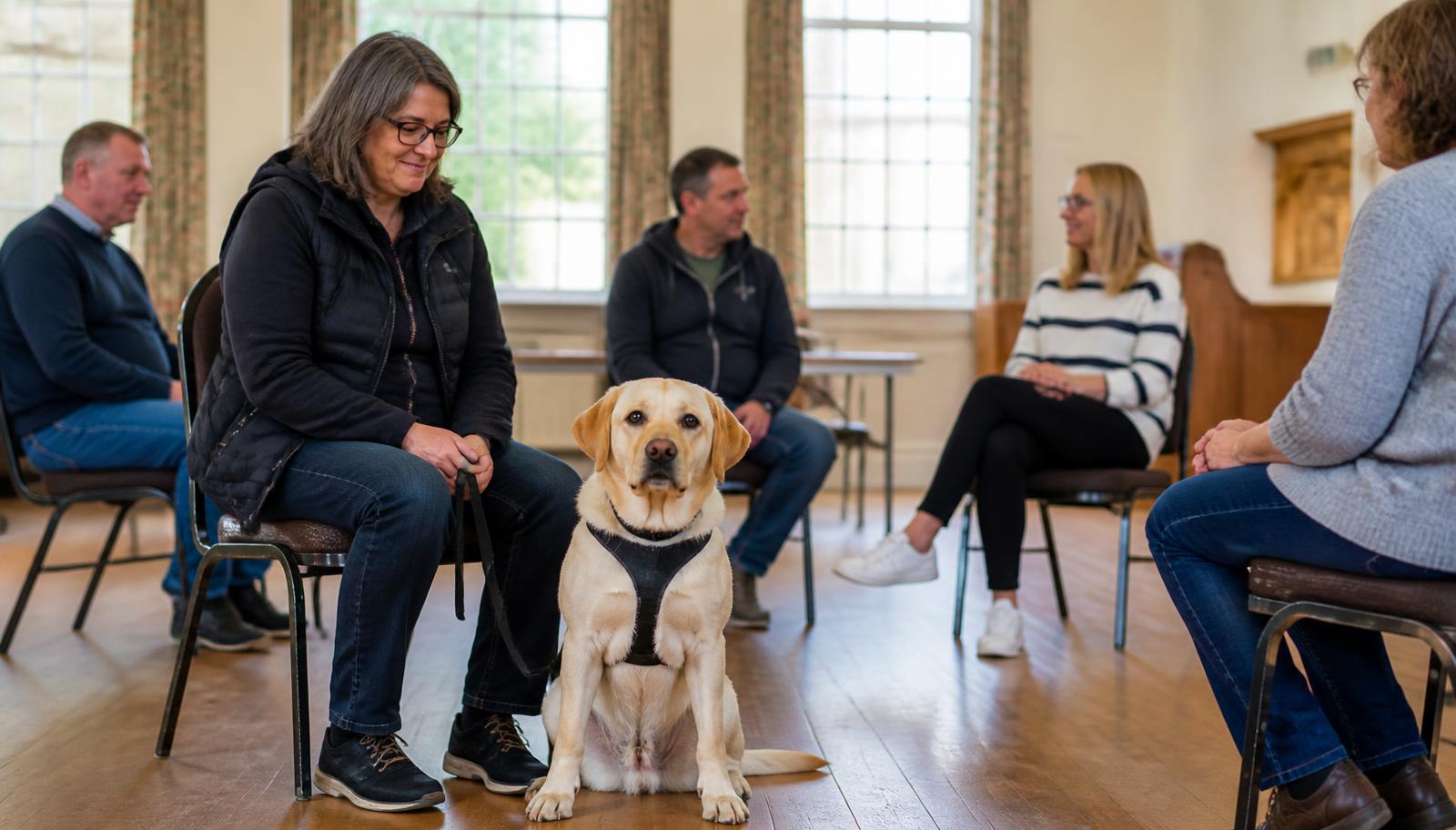
Owner workshops run best as evening talks or half-days with plenty of question time and practical demonstrations kept simple. Professional and rescue CPD works better as a full day, because assessment and decision-making need case discussion rather than slides. Online delivery suits multi-site teams and volunteer networks who cannot get everyone into one room, and it removes travel costs entirely.
Group size shapes the practical content. Talk-based sessions scale to large audiences comfortably. Anything involving live handling needs numbers capped, appropriate space and clear safety planning, and we agree that with you rather than improvising on the day.
- Evening talks (approximately 90 minutes to two hours) for owner groups
- Half-day and full-day workshops for teams and professionals
- Online seminars for distributed staff and volunteer networks
- Conference and open-day speaking slots
- Ongoing case-support arrangements alongside the training
Who delivers the sessions
John McGuigan has over 17 years' experience working with dogs across family homes, rescue shelters and courtrooms, speaks internationally, and holds the Karen Pryor Academy Dog Trainer Professional qualification. His behavioural assessment work includes independent expert witness reports in dog bite and aggression cases, with a successful track record. Which is why professional audiences get a realistic view of how aggression cases are evaluated rather than a theoretical one. Helen Hutcheson works alongside John across the training and behaviour side of the business.
Dog training is an unregulated industry in the UK and qualifications like the KPA DTP are issued by private training providers rather than regulatory bodies. We are open about that with professional audiences, and we ask you to judge the work on 17+ years of experience, 185 Google reviews and courtroom-tested behavioural casework.
Where we travel, and what else supports the training
We deliver in person across Glasgow, Greater Glasgow, South and North Lanarkshire, East Renfrewshire, Renfrewshire, East and West Dunbartonshire, Inverclyde, Falkirk and East Ayrshire, and travel further afield for booked seminars. Online delivery is available UK-wide and internationally.
Many organisations pair a seminar with ongoing resources. Our self-paced online courses run from £30 to £150 and cover loose-lead walking and aggression and reactivity, and the monthly membership at £43 per month includes live group support. Both useful for volunteers and staff who join after the training day. Remote 1-to-1 sessions are available for specific dogs in your care.
- In-person delivery across Glasgow and the west of Scotland, and travel further by arrangement
- Online seminars UK-wide and worldwide
- Online courses (£30 to £150) and monthly membership (£43/month) for ongoing staff learning
- Remote 1-to-1 case support for individual dogs after the session
Questions we're asked every week
Straight answers before you get in touch
How much does a seminar or workshop cost?
Seminars and workshops are quoted individually, because a two-hour evening talk for an owner group and a full-day CPD workshop for a rescue team are very different pieces of work. Tell us your audience, numbers, format and location and we'll come back with a price.
How long is a typical session?
Evening talks usually run 90 minutes to two hours. Workshops run as half-days or full days. Online sessions can be split across shorter blocks so shift teams can attend.
Do you travel outside Glasgow?
Yes. We work in person across Glasgow, Greater Glasgow, Lanarkshire, Renfrewshire, Dunbartonshire, Inverclyde, Falkirk and East Ayrshire, and travel further for booked seminars. Online delivery is available anywhere.
Can dogs attend?
It depends on the venue, the group size and the topic. Some sessions work best as talks with no dogs present; others include practical handling with numbers capped. We agree that with you when we scope the session.
Will you teach aversive handling techniques for staff safety?
No. We never teach or endorse prong collars, e-collars, slip leads or check chains. Safe handling is taught through body language, distance, cooperative care and management. Approaches that reduce bite risk rather than suppress the warnings that prevent bites.
Is this suitable for complete beginners as well as professionals?
Yes, but not in the same session. Content is pitched to the audience, so mixed groups get a session designed for a mixed group rather than a professional CPD day that loses half the room.
Do attendees get anything in writing?
Yes. Handouts and simple written standards your team can display and follow, which is what makes the training survive a busy shift and staff turnover.
Can you help with specific dogs in our care afterwards?
Yes. Remote 1-to-1 sessions and in-person visits within our service area are both available for individual cases, and some organisations arrange ongoing case support.
How far in advance should we book?
As early as you can. Seminar dates are scheduled around our 1-to-1 casework. We aim to reply to every enquiry within 48 hours with realistic availability.
Do you provide CPD certificates?
We provide written confirmation of attendance and the content covered for your records. Dog training is unregulated in the UK, so no provider issues a statutory accreditation. We are straightforward about that.
Are you insured to deliver at our venue?
Yes. We hold public liability insurance and professional care-of-custody cover for handling dogs, and we'll work with your own venue requirements.
Related training and next steps
Next step
Get your whole team reading dogs the same way
Tell us who your audience is, roughly how many people, the format and dates you have in mind, and the problems you most want addressed. We'll come back with a proposed outline and a price.
07790 608841- Free, no-pressure discovery call to start, with no obligation to book
- 4.7★ from 185 Google reviews
- Public liability and care-of-custody insured
- Reward-based only, no prong collars, e-collars, slip leads or check chains