
Serving West Dunbartonshire
Dog Training and BehaviourAcross West DunbartonshireClydebank, Dumbarton And Loch Lomondside
From tight Clydebank streets to the Loch Lomond shore at Balloch, this is one of the most varied areas we cover. And the busiest for tourist-season dog traffic. We assess your dog at your address, work the routes you use, and give you a written staged plan. Reward-based methods only.
Home visits and outdoor sessions throughout the area, evenings until 8:30pm Monday to Thursday. We aim to reply within 48 hours.
4.7★ · 185 Google reviews
Verified on our Google Business Profile
17+ years' experience
Family homes, rescue shelters and courtrooms
Karen Pryor Academy trained
John holds the KPA Dog Trainer Professional qualification
48-hour response
We aim to reply to every enquiry
Fully insured
Public liability + care-of-custody cover
Training in West Dunbartonshire
Three environments in fifteen miles: post-industrial town, river corridor and loch shore
West Dunbartonshire changes character faster than almost anywhere else we work. Clydebank is dense and urban, tenements, terraces, ex-council estates and short pavements, with a dog behind a great many front doors. Dumbarton, Bonhill and Renton follow the river with a mix of older stone housing, post-war estates and modern developments. Then Alexandria and Balloch open onto Loch Lomond, the national park boundary and some of the busiest recreational walking ground in Scotland during the warmer months.
That geography produces a clear split in the cases we take. Clydebank sends us close-quarters reactivity and absence problems in flats. Dumbarton and the Vale send us adolescent recall and lead work along the river and the Rock. Balloch and the loch shore send us something more unusual: dogs who are perfectly fine in winter and unmanageable in summer, because from May to September the same paths carry tourists, dogs from all over the country, cyclists, paddleboarders, campervans and children. Your dog has not regressed, the environment has changed by an order of magnitude.
We plan around that seasonality on purpose. Loch-shore cases get taught on quieter ground and at quieter hours first, then proofed deliberately against summer conditions rather than being thrown into a bank-holiday car park and blamed for failing. The Kilpatrick Hills, the canal towpath at Bowling and Old Kilpatrick, Levengrove Park and the quieter Leven riverside paths all give usable training space when the honeypot spots are full.
Sessions take place at your home for assessment and household work, then out on the routes where the problems happen. Remote 1-to-1 video coaching is available for households with awkward schedules or for dogs who find visitors to the house genuinely difficult.
Response times to West Dunbartonshire
Clydebank, Duntocher, Hardgate, Faifley and Old Kilpatrick are a short run from our Glasgow base along the Great Western Road and A82 and are covered weekly. Dumbarton, Bowling, Renton and Bonhill are also on our regular route. Alexandria and Balloch sit further out, so those visits are grouped where practical to keep travel sensible. We aim to reply to every enquiry within 48 hours, and cases involving a bite, a dog control warning or a legal deadline are prioritised when flagged in your first message.
Areas covered inside West Dunbartonshire: Clydebank, Dumbarton, Alexandria, Balloch, Bonhill, Renton, Old Kilpatrick, Bowling, Duntocher, Hardgate, Faifley, Milton.
Homes we work in here
- Clydebank tenements and cottage flats with shared closes, stairs and drying greens
- Ex-council semis and terraces in Faifley, Duntocher and Bonhill with short front gardens
- Older stone housing and villas in Dumbarton and Helensburgh-facing streets
- Modern riverside and estate developments with close-set gardens and shared paths
- Loch-side and village housing in Balloch and Alexandria with heavy seasonal footfall outside
- Semi-rural properties on the Kilpatrick Hills fringe with open hill and livestock access
What West Dunbartonshire owners call us about
- Lead reactivity on narrow Clydebank pavements and shared back paths
- Dogs who cope in winter and cannot handle summer tourist crowds at Balloch
- Recall failing on the Kilpatrick Hills and along the River Leven
- Barking and howling when left alone in flats with shared walls
- Adolescent dogs pulling hard and ignoring cues outdoors
- Chasing sheep and deer on hill ground above Old Kilpatrick and Renton
- Puppies needing structured socialisation before the summer season starts
- Noise fear from fireworks, river traffic and the A82 corridor
Services available in West Dunbartonshire
Every service below is delivered in West Dunbartonshire, at your home, on your usual routes, or by video
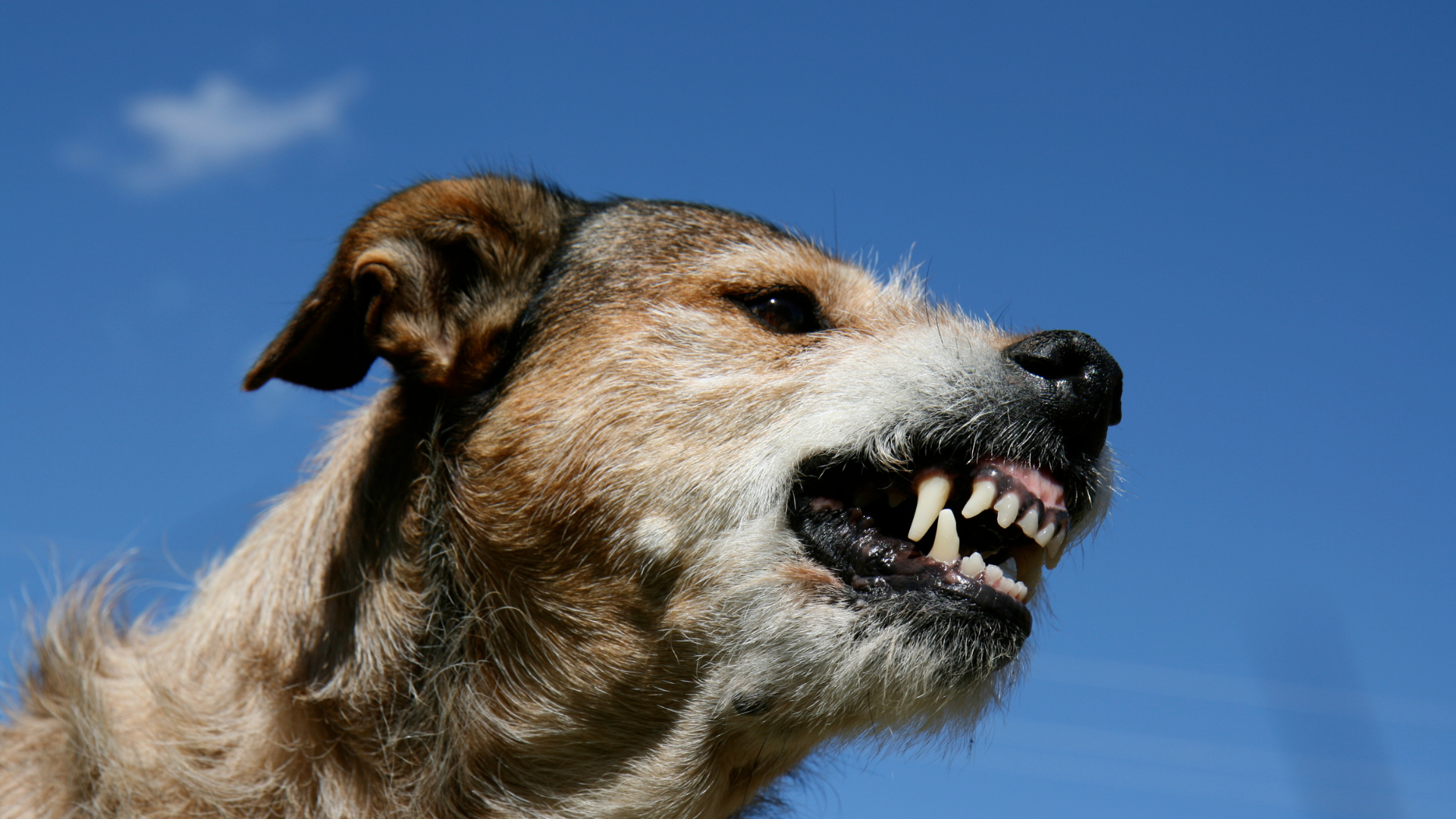
Aggression & Reactivity in West Dunbartonshire
Barking and lunging assessed on your own Clydebank or Dumbarton street, with distance and route planning that works in tight housing.
View service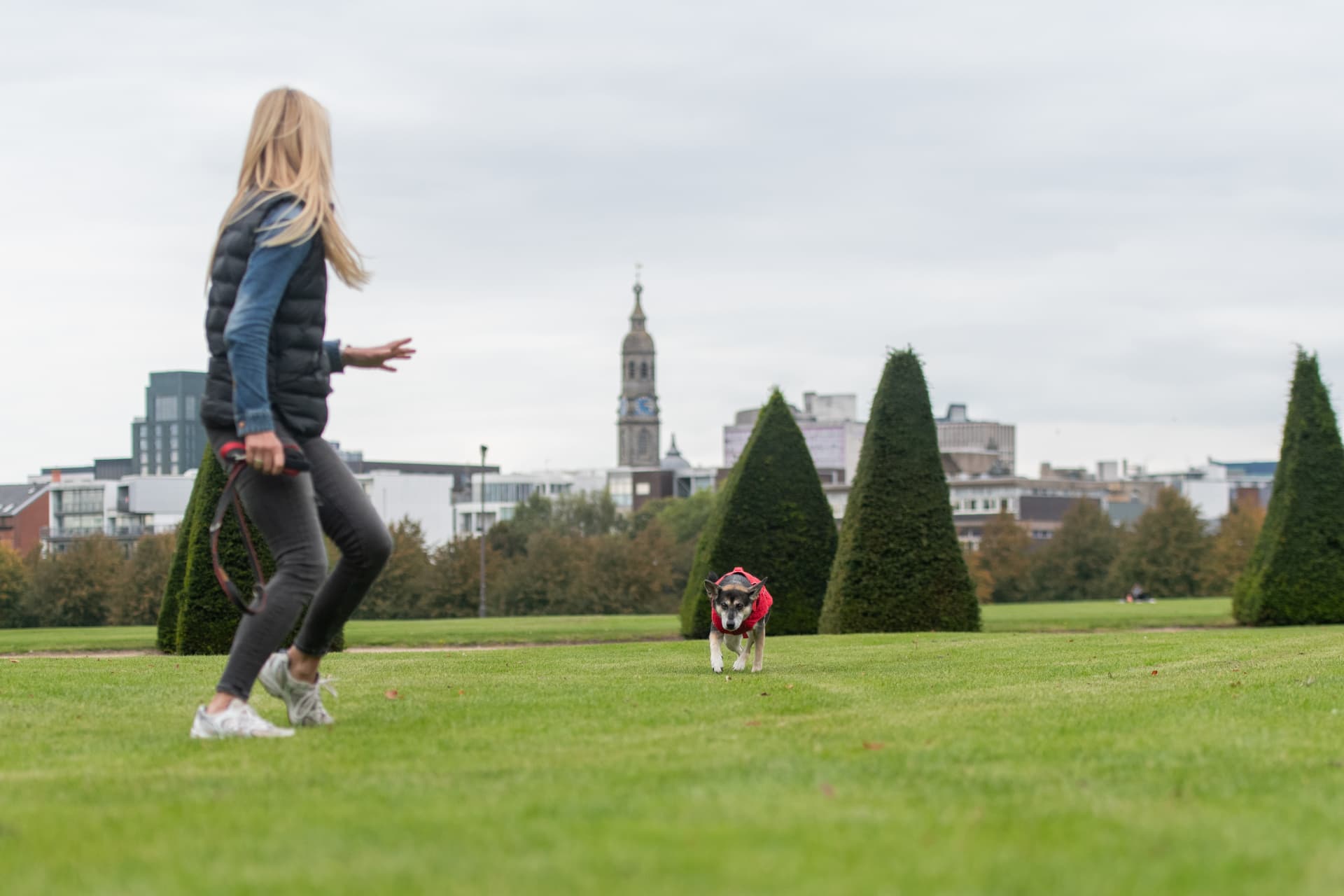
Recall Training in West Dunbartonshire
Recall proofed on the Kilpatrick Hills, the Leven paths and loch-shore ground. Including summer conditions, not just quiet winter walks.
View service
Adolescent Dog Training in West Dunbartonshire
For six-to-eighteen-month dogs whose strength arrived before their manners, rebuilt with attention and impulse-control work.
View service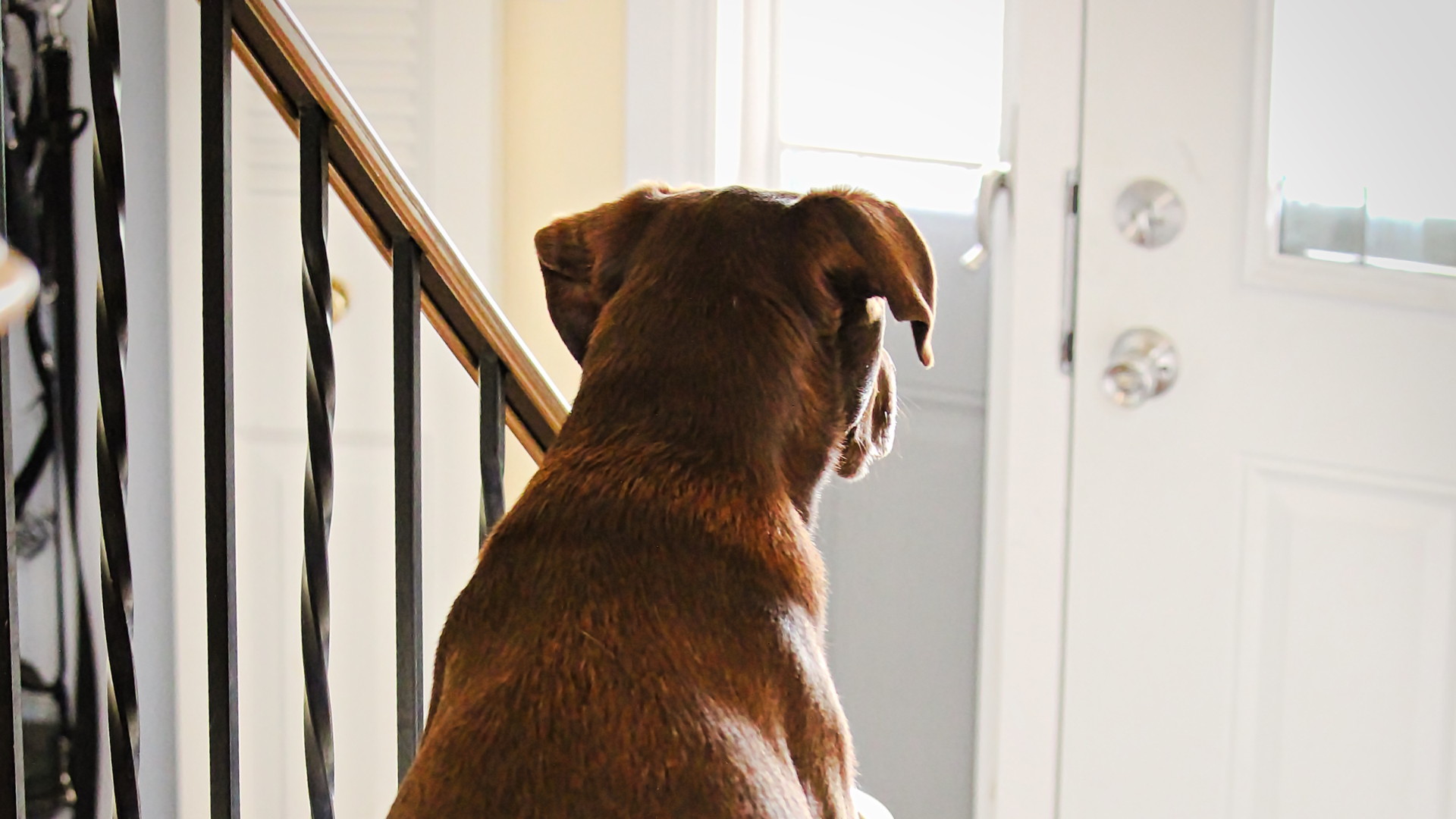
Separation Anxiety in West Dunbartonshire
Staged absence plans for flats and shared closes, separating genuine panic from noise triggers before any training starts.
View service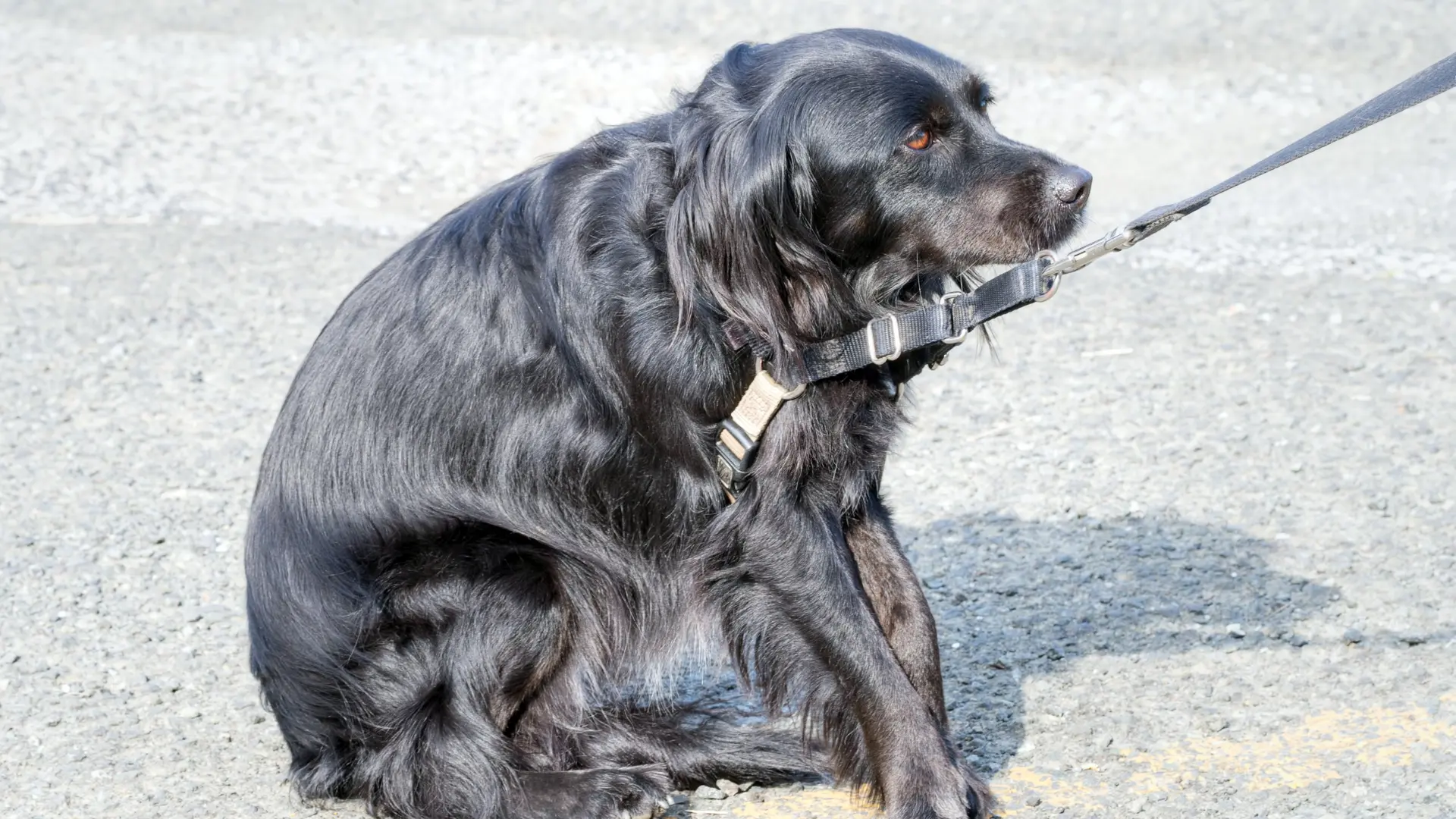
Fearful & Anxious Dogs in West Dunbartonshire
Confidence work for dogs overwhelmed by crowds, traffic or fireworks, built in graded steps at the dog's own pace.
View service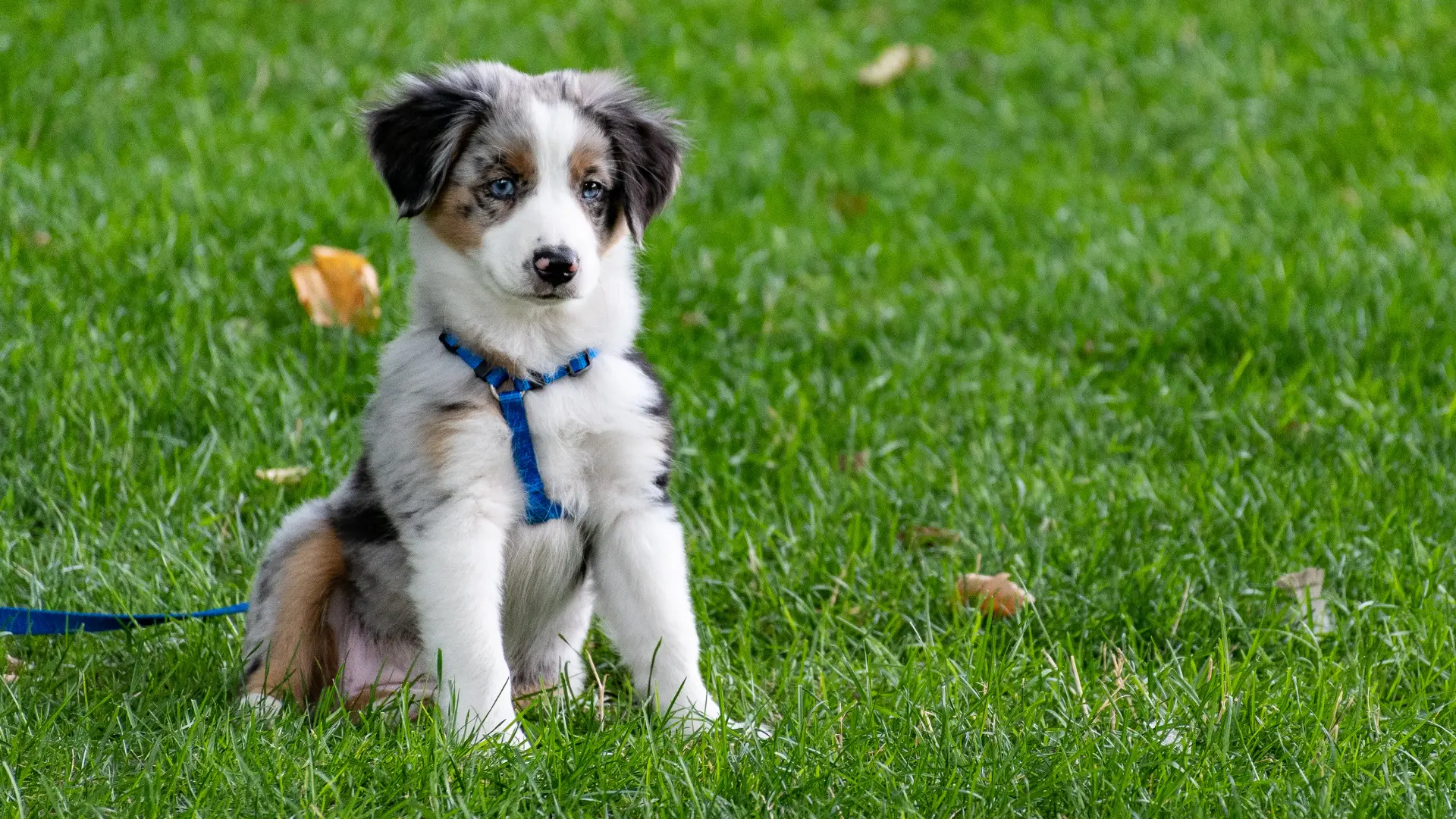
Puppy Training in West Dunbartonshire
Foundations that get a puppy ready for a busy summer: settling, handling, toilet training and calm exposure to crowds and dogs.
View service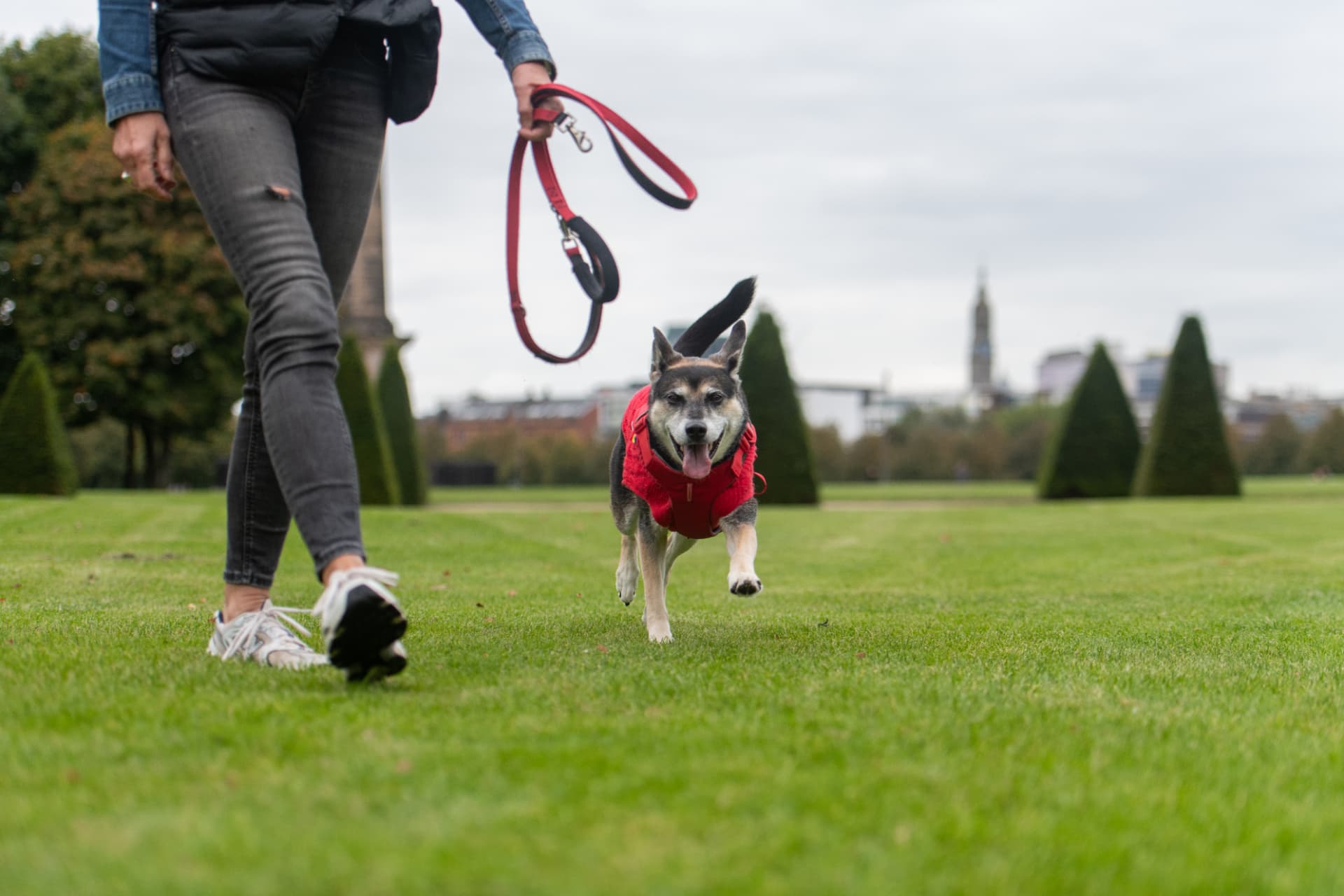
Loose-Lead Walking in West Dunbartonshire
Clear lead mechanics for strong dogs on short pavements and busy paths. Harness and information, never a slip lead.
View service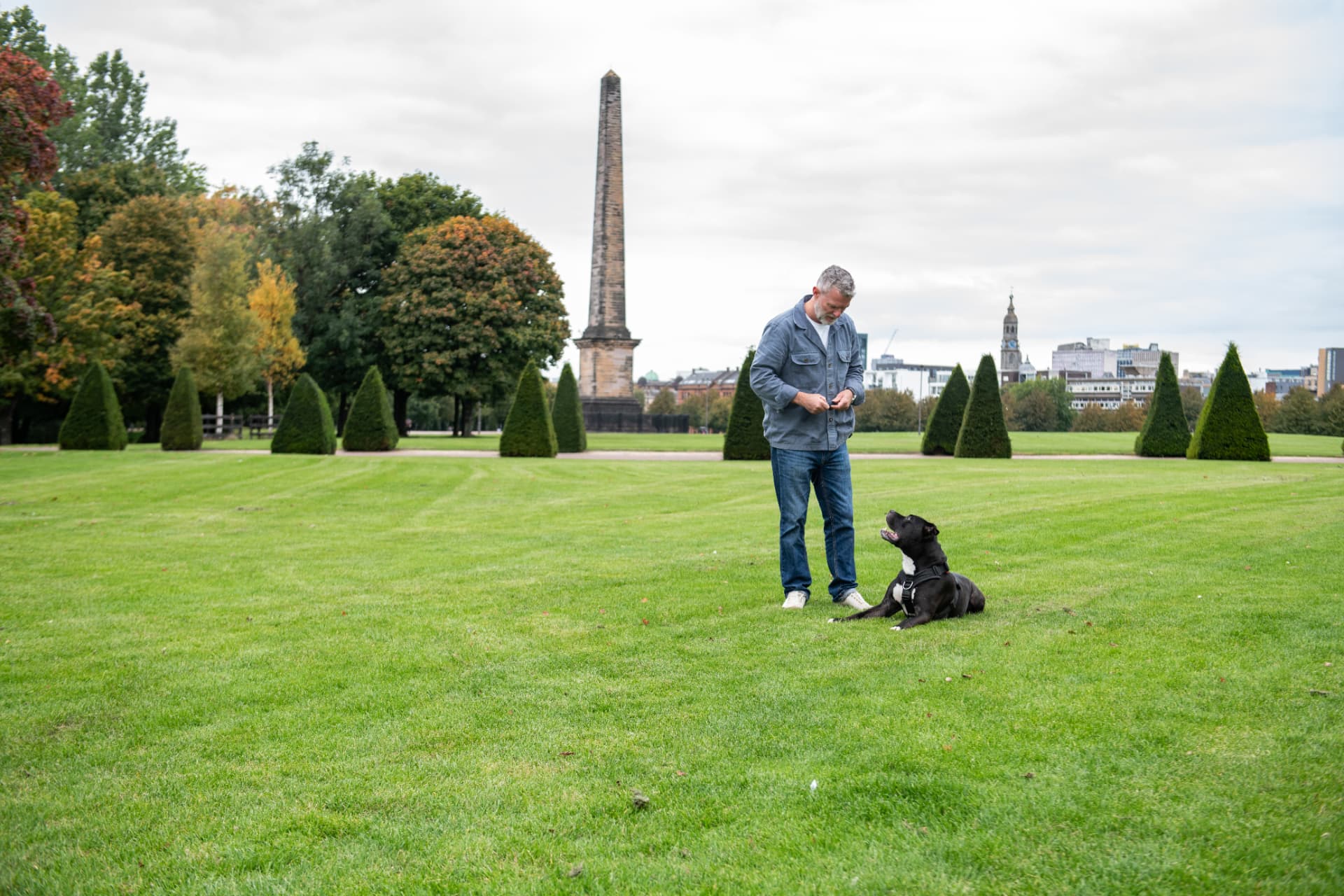
Obedience & Everyday Manners in West Dunbartonshire
Everyday manners for busy households: settle, door greetings, no jumping, calm behaviour around visitors and children.
View service
Remote 1-to-1 Training in West Dunbartonshire
Live video coaching for Loch Lomondside addresses, keeping sessions frequent without long round trips.
View serviceWhy choose us in West Dunbartonshire
Behaviour work that accounts for seasons, crowds and hill ground
John McGuigan has over 17 years' experience with dogs and holds the Karen Pryor Academy Dog Trainer Professional qualification. A private-provider professional programme assessed on demonstrated practical skill. He delivers seminars to trainers and rescue organisations and is instructed as an expert witness in dog behaviour cases, including bite incidents. Helen Hutcheson works alongside him on behaviour cases and owner coaching, which matters in households where several people walk the dog with different levels of confidence.
Our record is 4.7 stars from 185 Google reviews, and we hold public liability plus professional care-of-custody insurance. We do not use prong collars, e-collars, slip leads or check chains on any dog. For hill and livestock recall, where e-collars are still pushed locally, we use long-line management and reinforcement. A punished chase tends to become a quieter, faster chase, not a resolved one.
Seasonal planning built in
Loch-shore and Balloch cases are trained with the summer surge in mind, so progress made in February still holds in July.
Urban and hill experience
We handle Clydebank close-quarters reactivity and Kilpatrick Hills livestock recall. Different problems, different plans.
Weekly local coverage
Clydebank, Dumbarton and the river corridor are on our regular route, so follow-up sessions can be scheduled tightly.
Court-standard assessments
The structured assessment used in expert witness instructions underpins ordinary casework, with formal reports available.
No fear, no pain, no startle
Our stated standard on every dog. No shock, prong, slip or check equipment, no rattle bottles, no lead corrections.
Insured and written down
Public liability and care-of-custody cover, plus a staged written plan the whole household can follow between sessions.
Local pressure points
Post-industrial housing, seasonal crowds and open hill ground each add difficulty
Clydebank's housing was rebuilt and expanded around shipbuilding, so much of it is dense: tenements, four-in-a-block flats and terraced rows with shared closes and drying greens. Distance is scarce, dog density is high, and unplanned dog-to-dog contact happens at the back door rather than at a manageable forty metres. Older, poorly insulated flats also let stair and street noise straight through, which is why some apparent separation anxiety cases here turn out to be reactions to sound rather than to absence. A distinction that changes the whole plan.
The A82 and Erskine Bridge corridors run through the area, bringing constant traffic noise and sudden startle sounds into gardens and onto walking routes. River and rail activity adds more. For sound-sensitive dogs this means very little acoustic recovery across the day, so baseline stress is already elevated before training starts. Firework season in dense housing intensifies it further, which is why we prefer to begin sound work in late summer rather than the week the bangs start.
Then there is the seasonal swing at the northern end. Balloch, the loch shore and the national park gateway are quiet in winter and extremely busy from spring through to September, with visiting dogs, cyclists, campervans, children and water activity. Dogs that appear trained in low season are often simply untested. Higher up on the Kilpatrick Hills and the Renton hill ground, sheep and deer bring chase risk with legal consequences, and exposed weather. Wind off the loch, heavy rain, longer-lying ice. Cuts walk length in the months adolescent dogs need it most.
Conditions in West Dunbartonshire that shape the training plan
- Dense Clydebank tenement and four-in-a-block housing: no distance available on daily walks
- Shared closes and drying greens: unplanned dog contact at zero distance
- Poorly insulated older flats: external noise driving what looks like separation distress
- A82 and Erskine Bridge corridors: constant traffic roar with sudden startle noise
- Loch Lomondside seasonal surge: environments that change tenfold in difficulty by May
- Kilpatrick Hills and Renton hill ground: sheep and deer within chase distance
- Exposed loch-side weather: wind, heavy rain and ice shortening winter exercise
- Extended firework season in tight housing: weeks of sustained noise exposure
How we work in West Dunbartonshire
The same five-stage process for every dog, wherever you live
Step 1
Enquiry and case screening
You tell us what is happening, where you live and what you have already tried. We aim to reply within 48 hours and tell you honestly whether behaviour work, training or a vet referral is the right first step.
Step 2
Assessment in the place it happens
The first session takes place at your home or on the exact route, park or close where the behaviour shows up. Because that context is the information we need.
Step 3
Written plan and diagnosis
You get a clear explanation of why your dog is behaving this way and a staged plan with the steps in order, so you are never guessing what to practise between sessions.
Step 4
Coached practice and adjustment
We coach you through the handling in person or over video, then adjust the plan against what actually happens in the following days rather than sticking to a script.
Step 5
Verification and handover
We test the behaviour under real distraction levels, confirm you can run the plan without us, and leave you with the maintenance routine plus ongoing support options.
West Dunbartonshire questions
Straight answers for dog owners in West Dunbartonshire
Do you cover all of West Dunbartonshire?
Yes. Clydebank, Duntocher, Hardgate, Faifley, Old Kilpatrick, Bowling, Dumbarton, Renton, Bonhill, Alexandria and Balloch. Sessions take place at your home or outdoors nearby, as we have no premises for clients to visit.
How fast can you reach Clydebank?
Clydebank is one of our closest areas outside the city and is covered every week, so an appointment inside the working week is usually possible. We aim to reply to every enquiry within 48 hours.
How quickly can you get to Dumbarton, Alexandria or Balloch?
Dumbarton and the river corridor are on our weekly route. Alexandria and Balloch are further out, so those visits are grouped where practical and you may be offered a specific day. Remote 1-to-1 video coaching is available if you want to start sooner.
What does dog training cost in West Dunbartonshire?
Fees are quoted per case once we know the behaviour, its history and how many people handle the dog. If cost is the barrier, our self-paced online courses run from £30 to £150 and the ongoing membership is £43 per month. And we will say honestly if that suits your situation better.
Do you offer emergency visits here?
We are not an emergency service. We do prioritise urgent cases such as bites, dog control warnings, court deadlines and dogs that cannot be left alone at all, so flag that clearly in your first message.
My dog is fine at Balloch in winter but impossible in summer. What's happening?
The environment changed, not your dog. Summer brings visiting dogs, crowds, bikes and water activity to the same paths, which is a far harder test than a quiet February walk. We train for the summer version deliberately, using quieter ground and off-peak hours first.
My dog chases sheep on the Kilpatrick Hills. Will you use an e-collar?
No. Never, for any behaviour. Livestock chasing is a legal and welfare matter, so we stop the rehearsal immediately with secure long-line management, then build recall value and impulse control until the behaviour holds under equivalent distraction.
I live in a Clydebank flat and my dog barks when I go out. Where do you start?
With the diagnosis: panic at your absence, arousal at close and stair noise, and boredom all sound similar from outside the door but need different plans. Once identified, we build a staged absence plan. No crating a panicking dog and no leaving one to cry it out.
Do you work with rescue dogs newly adopted into the area?
Yes, including overseas rescues. New arrivals get a decompression-first plan with minimal demands in the early weeks, safe management, and training introduced once the dog is settled enough to learn something.
Do I need a vet referral before booking?
No. We take direct enquiries and also work on vet referral. If the history points to pain or another medical driver, common with sudden behaviour change, we will ask you to involve your vet alongside the behaviour work.
Nearby areas and next steps
Next step in West Dunbartonshire
Book a West Dunbartonshire behaviour assessment
Tell us the breed, the age, what happens, where it happens, and what you have already tried. We will reply with a straight view on whether this is training, behaviour work or a veterinary question first, plus a realistic timeline from Clydebank to Balloch. Reward-based only, fully insured, 4.7★ from 185 reviews.
07790 608841- 4.7★ from 185 Google reviews
- Public liability and care-of-custody insured
- Reward-based only. No prong collars, e-collars, slip leads or check chains